Compliance without complexity: Battery manufacturers can streamline regulatory compliance through automated data collection and verification
Direct customer engagement: The QR code-based digital passport creates a new channel for customer interaction
Protection against counterfeiting: Google Cloud-powered tracking ensures each battery's identity is securely verified
New revenue opportunities with data-driven services, such as battery health monitoring, predictive maintenance alerts, or performance optimization recommendations
More efficient recycling: Detailed material composition data enables recyclers to optimize processes for maximum material recovery
Since 1899, KURZ has been evolving its thin-film and surface finishing excellence to meet the digital-first circular economy's demands. Today, its digital subsidiary, KURZ DIGITAL, uses Google Cloud to pioneer revolutionary battery tracking and lifecycle management, turning regulatory compliance into strategic business value.
Since 1899, KURZ has been evolving its thin-film and surface finishing excellence to meet the digital-first circular economy's demands. Today, its digital subsidiary, KURZ DIGITAL, uses Google Cloud to pioneer revolutionary battery tracking and lifecycle management, turning regulatory compliance into strategic business value.

The challenge: Beyond regulatory compliance
With the introduction of the EU Battery Regulation, manufacturers face unprecedented requirements for battery traceability. By February 2027, every industrial battery with a capacity of over 2 kWh entering the European market must have a comprehensive "battery passport", a digital record that tracks everything from raw material sourcing to recycling readiness.
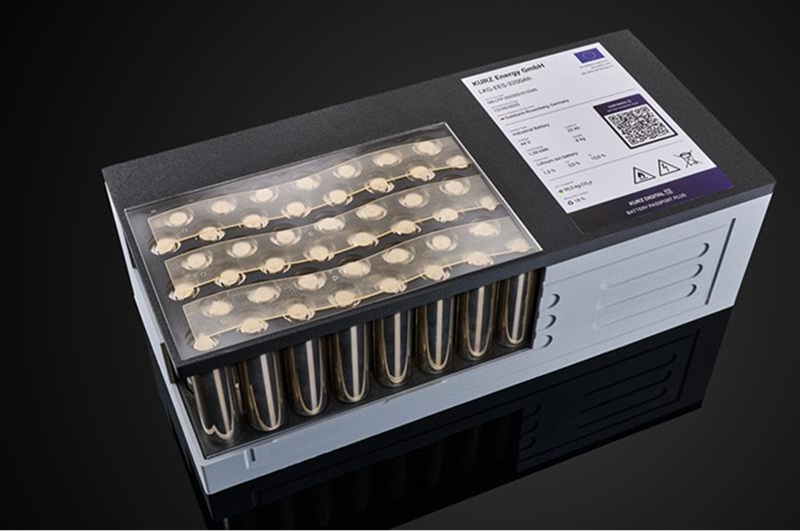
For battery manufacturers, especially small and medium enterprises (SMEs), this presents a significant challenge. Many lack the digital infrastructure to collect, manage, and securely store this data throughout a battery's lifecycle, which can span decades.
The EU Battery Regulation isn't just about documentation. It's about fundamentally rethinking our relationship with physical products in a circular economy. The question became: how can we build a solution that not only satisfies regulatory requirements but turns data into strategic value?
Mirko Plass
Business Development Manager, KURZ DIGITAL
"Most companies view this as just another compliance burden eating up time and resources," explains Mirko Plass, Business Development Manager at KURZ DIGITAL. "But what if it's an opportunity? What if comprehensive battery data could unlock new business models, improve product design, and create competitive advantages?"
This perspective reflects KURZ's approach as a family-owned business with a 125-year history, thinking not just about immediate compliance but about long-term value creation. The company recognized that, beyond meeting regulatory requirements, a well-designed battery passport system could revolutionize how manufacturers interact with their products throughout the entire lifecycle.
"The EU Battery Regulation isn't just about documentation," says Plass. "It's about fundamentally rethinking our relationship with physical products in a circular economy. The question became: how can we build a solution that not only satisfies regulatory requirements but turns data into strategic value?"
The solution: A cloud-powered battery passport
KURZ DIGITAL's approach is built on its TRUSTCODE® technology, initially developed for brand protection and product authentication. This system already enabled secure product marking, tracking, and data connectivity—core capabilities that aligned perfectly with battery passport requirements.
With Google Cloud as a strategic implementation partner, KURZ DIGITAL developed a flexible, modular architecture for its battery passport solution. The system supports various deployment models—from public cloud to hybrid or on-premises—giving manufacturers the freedom to choose the environment that fits their needs.
One of the biggest challenges for manufacturers, especially SMEs, is the fixed cost of developing a product passport system from scratch. Our research shows that approximately 90% of costs in custom development are fixed, regardless of whether you're tracking 100 batteries or a million. With our Google Cloud-powered solution, companies can start small and scale as their needs evolve.
Mirko Plass
Business Development Manager, KURZ DIGITAL
The technical architecture leverages three key Google Cloud components:
- Google Kubernetes Engine (GKE) Autopilot: A fully managed container orchestration platform that enables seamless deployment and operation of the Battery Passport application without the complexity of infrastructure management.
- Cloud SQL: A reliable, high-performance relational database for securely storing and quickly retrieving battery data, compliance records, and recycling information.
- Cloud Storage: A cost-efficient, long-term storage solution for large-scale battery data, including material certifications, serial numbers, and battery health insights.
The implementation on Google Cloud demonstrates the solution’s full potential in a scalable, secure cloud infrastructure—making it ready for high data volumes, long retention periods, and seamless integration into existing ecosystems.
"One of the biggest challenges for manufacturers, especially SMEs, is the fixed cost of developing a product passport system from scratch," notes Plass. "Our research shows that approximately 90% of costs in custom development are fixed, regardless of whether you're tracking 100 batteries or a million. With our Google Cloud-powered solution, companies can start small and scale as their needs evolve."
The Battery Passport solution integrates seamlessly with existing manufacturing systems through APIs while providing a user-friendly frontend for different stakeholders. Each battery is assigned a unique identifier, typically implemented as a QR code, which serves as the link between the physical product and its digital record.
A key innovation in the KURZ DIGITAL solution is its tiered access model, which provides appropriate information to different stakeholders:
- Public access: Consumers can scan a battery's QR code to verify authenticity, view environmental impact data, check the current health status, and access user manuals or recycling instructions.
- Authorized parties, including recyclers and repair shops, receive additional technical information, such as detailed material composition, disassembly instructions, and locations of hazardous materials.
- Regulatory bodies can access comprehensive compliance documentation, including raw material sourcing, carbon footprint calculations, and verification of recycled content.
"What makes this approach powerful is how it transforms a regulatory requirement into a direct communication channel with customers," says Plass. "Manufacturers can now provide real-time battery status information, operational recommendations, and even service offers directly through the digital passport."
This creates opportunities for new revenue streams and business models, from extended warranty services based on proper battery usage to predictive maintenance alerts that optimize battery performance and longevity.
The potential of AI and advanced analytics
While the current implementation focuses on core compliance and tracking capabilities, KURZ DIGITAL is actively exploring how Google Cloud's AI and analytics capabilities can extract additional value from battery lifecycle data.
"As batteries move through their lifecycle, they generate incredibly valuable data," explains Plass. "With tools like Vertex AI and BigQuery, manufacturers can analyze usage patterns, identify performance factors, and generate insights that improve future product designs."
Potential applications include:
- Predictive maintenance: Algorithms that identify when batteries might need servicing before problems occur
- Lifecycle optimization: Personalized recommendations that help users maximize battery lifespan
- Second-life matching: Systems that identify optimal second-use applications based on a battery's condition and performance history
- Material forecasting: Predictive models that help manufacturers anticipate when batteries will return for recycling
Companies that approach the battery passport strategically are discovering benefits far beyond compliance. They're finding ways to differentiate their products, enhance customer relationships, and unlock entirely new business models.
Mirko Plass
Business Development Manager, KURZ DIGITAL
"The beauty of Google Cloud's approach is that these capabilities can be added incrementally as a manufacturer's data strategy matures," notes Plass. "A company can start with basic compliance, then gradually implement more sophisticated analytics as their understanding evolves."
The EU Battery Regulation`s deadline of February 2027 means that full-scale implementations are still emerging. But early demonstrations and pilot projects already highlight significant potential benefits:
- Compliance without complexity: Battery manufacturers can streamline regulatory compliance through automated data collection and verification, reducing administrative overhead while ensuring full adherence to EU requirements.
- Direct customer engagement: The QR code-based digital passport creates a new channel for customer interaction, enabling manufacturers to provide product information, usage guidance, and support directly to users.
- Protection against counterfeiting: Google Cloud-powered tracking ensures each battery's identity is securely verified, reducing the risk of counterfeit products entering the market.
- New revenue opportunities: Manufacturers can develop data-driven services, such as battery health monitoring, predictive maintenance alerts, or performance optimization recommendations, to enhance their offerings.
- More efficient recycling: Detailed material composition data enable recyclers to optimize processes for maximum material recovery, thereby enhancing the performance of the circular economy.
"What we're seeing is that companies that approach the battery passport strategically are discovering benefits far beyond compliance," observes Plass. "They're finding ways to differentiate their products, enhance customer relationships, and unlock entirely new business models."
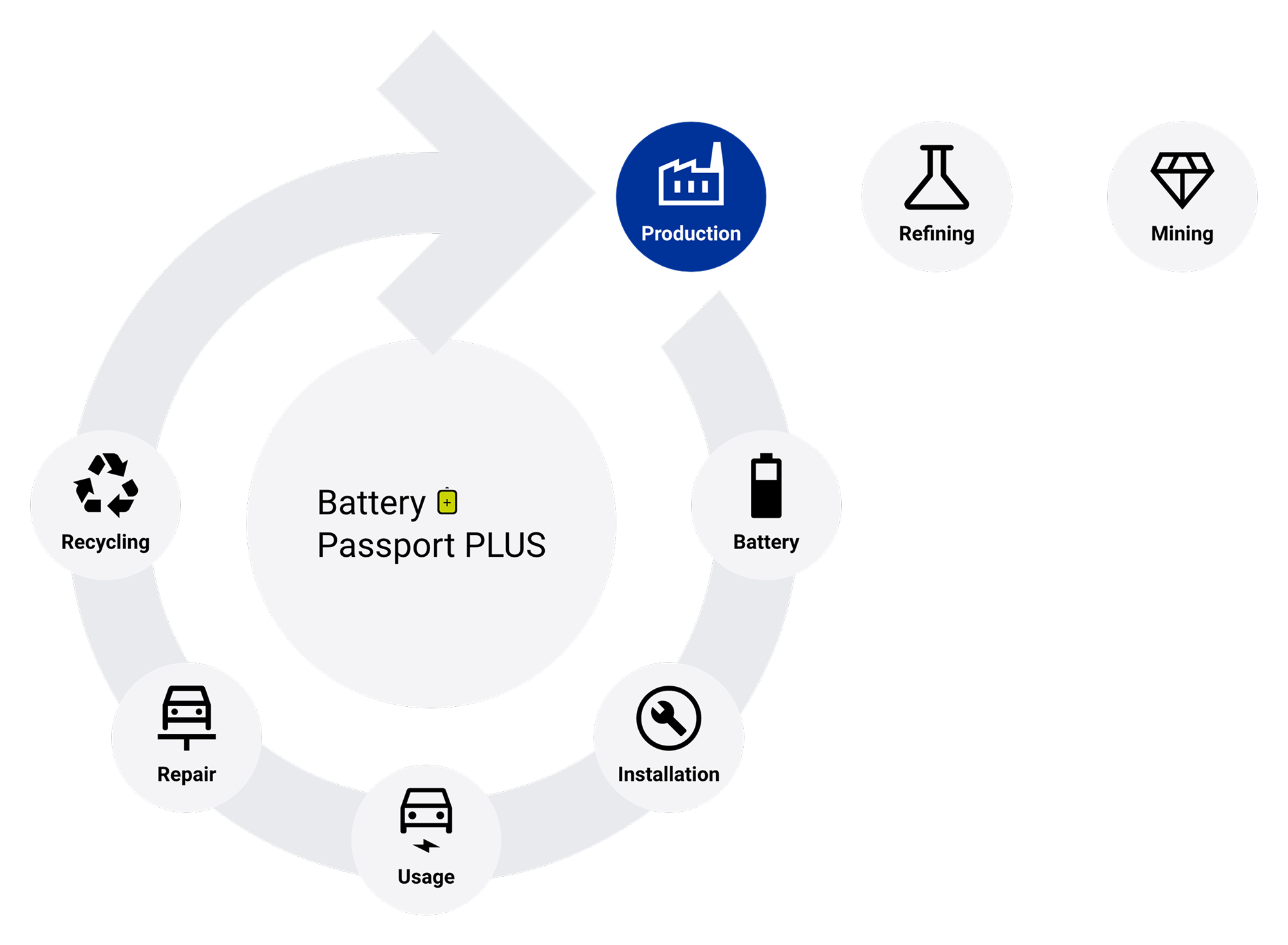
Looking ahead: The future of digital product passports
KURZ DIGITAL sees the battery passport as just the beginning of a broader transformation. The EU is already planning to extend digital product passport requirements to other sectors, including electronics, textiles, furniture, and construction materials.
The battery passport is essentially a blueprint for the future circular economy. We're building not just for today's requirements, but for a fundamentally new way of thinking about products, where transparency, sustainability, and data-driven decision-making are central to every aspect of the lifecycle.
Mirko Plass
Business Development Manager, KURZ DIGITAL
"The battery passport is essentially a blueprint for the future circular economy," concludes Plass. "We're building not just for today's requirements, but for a fundamentally new way of thinking about products, where transparency, sustainability, and data-driven decision-making are central to every aspect of the lifecycle."
With Google Cloud as its foundation, KURZ DIGITAL is well-positioned to help manufacturers not only meet regulatory requirements but transform those requirements into strategic advantages. As the circular economy accelerates, the partnership of Kurz's industrial expertise with Google's cloud innovation creates a powerful platform for sustainable growth and digital transformation.
"In the end, those who control the data will control the future," says Plass. "Our battery passport solution gives manufacturers the tools they need to harness that data, turning what might seem like a regulatory burden into a genuine competitive advantage in a rapidly evolving market."
KURZ DIGITAL is helping to shape digital change within the KURZ Group worldwide with customized digital products and services. As an application specialist, KURZ DIGITAL offers tailor-made digitization solutions and concepts. The KURZ subsidiary develops and programs digital applications and services to simplify processes and improve user experiences.
Industries: Digital Solutions, Technology
Location: Germany
Products: BigQuery, Vertex AI, Google Kubernetes Engine (GKE), Cloud SQL, Cloud Storage