Significant reduction in document review time
96% accuracy in automated identity document extraction
Zero data persistence in LLM processing, ephemeral GPU computation only
Customer-managed encryption (BYOK) ensures complete data sovereignty
Cost-optimized AI: Multiple Gemini models match task complexity to price
Vienna Insurance Group's innovation lab built a GDPR-compliant AI on Google Cloud, significantly reducing claims review time while ensuring data sovereignty.
Vienna Insurance Group's innovation lab built a GDPR-compliant AI on Google Cloud, significantly reducing claims review time while ensuring data sovereignty.
Building a cloud-native culture
inside a 200-year-old insurer
When Wiener Städtische Versicherung AG, one of Austria's oldest insurers, founded in 1824, completed a massive host system replacement in the late 2010s, the technical foundation was modernized. But true digital innovation for customers remained elusive. The mainframe dependencies were gone, but the culture of stability-first IT remained.
"The assumption was that culture shapes outcomes," says Christian Reither, Head of Technology at viesure Innovation Center, the corporate startup founded in 2019 to drive innovation. "If your culture is 'we're responsible for big systems running safely and stably,' there's little flexibility for completely rethought solutions you can try and discard if they don't work."
The viesure Innovation Center was deliberately structured outside the traditional IT organization, reporting directly to the board with freedom to experiment, even to fail. The timing proved fortunate: when the AI wave hit after 2022, Wiener Städtische's IT partner, Twinformatics, had already chosen Google Cloud as the platform for new development in 2020-2021.
"We were lucky in that sense," Reither reflects. "The cloud decision had been made before AI was such a focus. When generative AI emerged, we were already set up on a platform that turned out to be at the forefront of innovation."
Meanwhile, the workforce was evolving. Younger claims handlers brought different expectations and career mobility. "It's generally a knowledge issue, not just because of retirement, but because of flexibility in the job market," Reither notes. "People change their careers more frequently. This generation also doesn't have much affinity for hanging file cabinets."
The question became: How do you preserve the personal trust that defines insurance relationships while meeting modern expectations for speed and digital convenience?
We wanted to rethink the status quo. The idea was: let's use modern tools such as cloud computing and AI, to bring the insurance experience into the digital age for customers.
Christian Reither
Head of Technology, viesure
From document chaos to intelligent assistance
The breakthrough came from observation, not assumption. In partnership with Google's Austrian team, viesure conducted a "Seesaw Workshop" – a structured design sprint involving business stakeholders, IT teams, and Google specialists. The original idea was to build an AI system to validate the plausibility of invoices for claims.
But when the team shadowed actual claims handlers at Wiener Städtische, they discovered a more fundamental problem. "We found that 40% of their time goes to simply sifting through data," Reither explains. "Getting an overview is already so complicated. The first step should actually be just having an overview of the entire case before we even discuss the invoice."
Claims handlers were drowning in fragmented systems, juggling multiple applications, scattered documents, invoices, and reports just to understand each case. The real bottleneck wasn't decision-making; it was information gathering.
Enter Smart Claim Assistant, built on Google Cloud's Vertex AI with Gemini. The system automatically analyzes all claim documents, regardless of format, and presents handlers with a structured dashboard summarizing the entire case. We launched it in Q1 2026 While we expect this technology to significantly reduce review times, we are committed to a cautious, phased rollout. This deliberate approach ensures we build trust with our users and maintain total accuracy as we scale.
The current version deliberately focuses on assistance rather than automation. "Smart Claim Assistant displays information, summarizes documents, but gives no action recommendations," Reither explains.
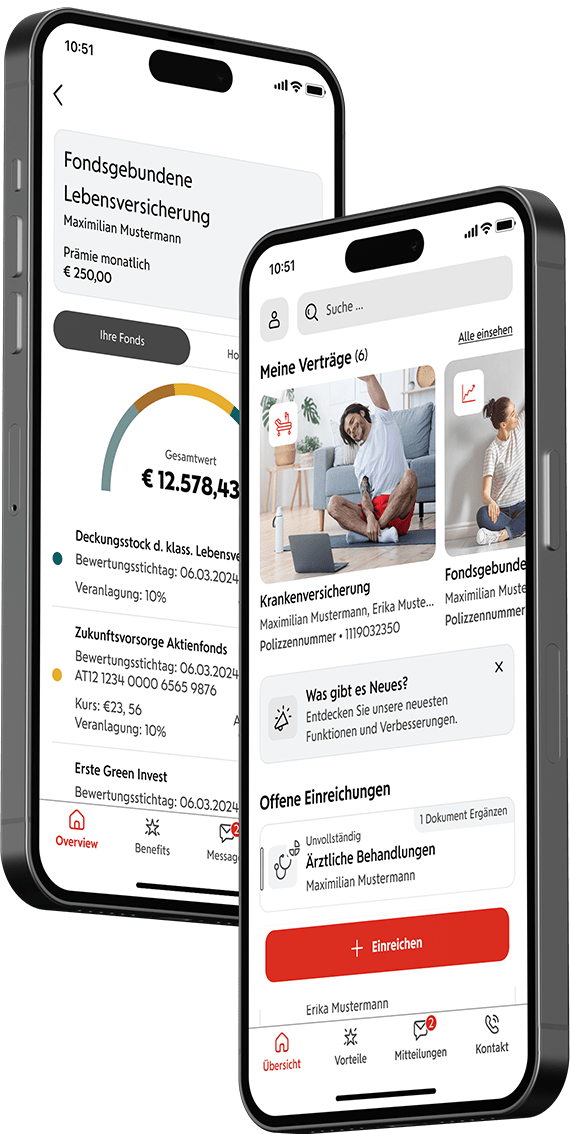
"People remain fully autonomous, and that's intentional. By first using AI to help people without taking over their work, trust in the system's quality grows. Only when employees trust the system do they accept it taking over routine tasks."
The technical architecture leverages Google Cloud's integrated data platform. "Google built this from the start to make it very easy to combine structured and unstructured data with vector search," Reither notes. "We tried alternatives, but everything else was much more cumbersome."
For identity document verification in life insurance, viesure developed ID Extractor, a multi-stage solution that combines vector search for document classification, Gemini for data extraction, and Cloud Vision OCR with machine-readable zone (MRZ) parsing for validation. The hybrid approach achieves 96% accuracy.
Critically, viesure optimizes costs by matching AI model complexity to task requirements. "We quickly realized it's not one prompt and one call that solves everything," Reither explains. "You have to break the problem into individual steps. For each step, you need to find the right size tool where price-performance fits." Simple extraction tasks use Gemini Flash; complex document understanding uses Gemini Pro.
Google gave us this raw power of innovation; it really feels like it's made by developers for developers, giving us access to the newest technologies. The developer experience of making data AI-processable was a huge advantage.
Christian Reither
Head of Technology, viesure
Processing sensitive data without compromise
For an insurance company, processing personal health data and identity documents with AI raises immediate compliance questions. How do you leverage powerful cloud-based models while ensuring data sovereignty and GDPR compliance?
viesure's answer: a multi-layered security architecture built on Google Cloud's enterprise controls.
"The nice thing about Google Cloud is that it supports Bring Your Own Key," Reither explains. "The company has its own encryption key, so Google has no access. All data stored in the cloud is encrypted with our key. Even in the worst–case scenario, if a foreign authority demands a data handover, they'd receive encrypted data they can't decrypt. We hold the key."
But encryption at rest was only the first layer. The team also needed to ensure that sensitive personal data processed by large language models wouldn't be persisted or exposed. Google Cloud's architecture provided the solution.
"With LLM models, data isn't persisted," Reither notes. "Data is transferred encrypted, processed temporarily in GPUs—in processor units located in European regions—but then forgotten. It doesn't stay there. Someone could theoretically make a snapshot of GPU memory at that exact moment, but that would only capture a tiny excerpt, not a major data leak."
The approach satisfied the corporate compliance team at Wiener Städtische. Data is decrypted, processed in GPU RAM for inference, then immediately returned to the encrypted environment, with no persistence outside the company's control.
Beyond infrastructure security, viesure implemented comprehensive AI governance aligned with the EU AI Act. "The corporation has established procedures for how legal requirements are met," Reither explains. "Employee training on AI systems, use case classification by risk category as specified in the EU AI Act, required documentation based on risk class, human-in-the-loop requirements, and so on."
For each AI use case, viesure conducts risk assessments with business stakeholders. Where are the error possibilities? How do we mitigate them? The result: Standard Operating Procedures adapted specifically for AI-assisted workflows, including requirements that high-stakes decisions, such as claim denials, still require human review of source documents, not just AI summaries.
This human-centric approach reflects Wiener Städtische’s business model. "This is a traditional business built on trust with customers, it's a personal business," Reither says. "Trust comes from interpersonal relationships and conversations, not from a chatbot."
We work with personal data, especially health data. Everything is aligned with corporate compliance. The EU AI Act requirements are documented, employee training is mandatory, use cases are risk-classified. It's all clearly defined.
Christian Reither
Head of Technology, viesure
Looking ahead, the structured data generated by Smart Claim Assistant will serve as the foundation for pattern recognition, invoice validation, complexity scoring, and, eventually, more autonomous capabilities. But the philosophy remains: enhance human competence, don't replace it.

viesure is the innovation center of Wiener Städtische Versicherung AG, one of Austria's largest insurance companies.
Industry: Financial Services
Location: Austria
Products: Vertex AI, Cloud Vision API, Document AI, BigQuery, Cloud Storage, Cloud Key Management